
Santa Barbara County Uber Accident Attorney
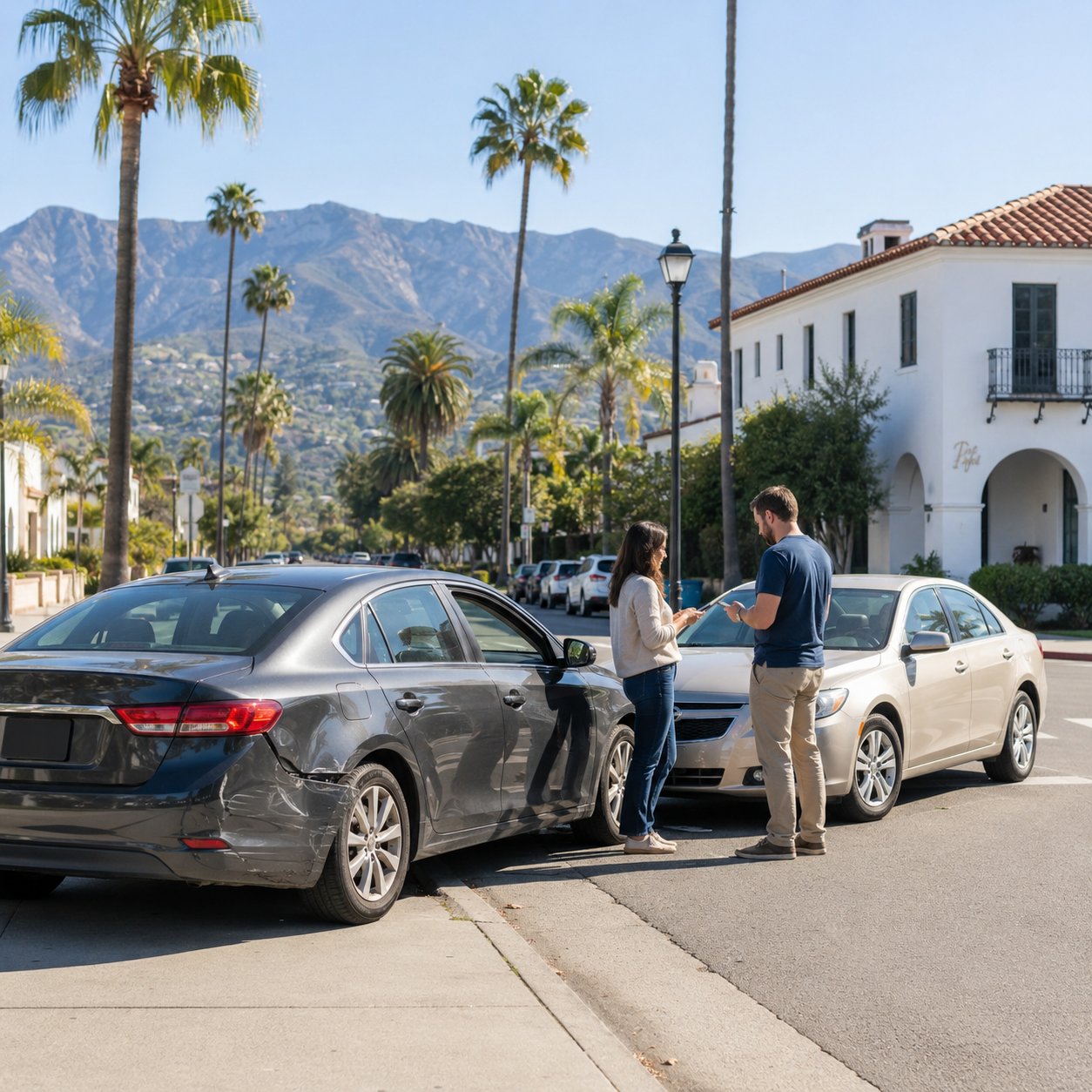
Rideshare accidents add an insurance question that ordinary car crashes usually do not: what was the participating driver doing in the app at the exact time of the collision? California’s required TNC coverage changes depending on whether the driver was logged off, logged in waiting, had accepted a ride, or was transporting a passenger.
Safeguard Firm evaluates Santa Barbara County Uber and rideshare accidents by preserving ordinary collision evidence and identifying platform status, trip records, applicable TNC coverage, personal insurance, and any other responsible parties.
Free Consultation
If you were injured in Santa Barbara County in a matter involving an Uber or rideshare accident, contact Safeguard Firm at 310-882-6575 or JR@Safeguardfirm.com to discuss the circumstances and potential legal options.
Why App Status Matters
California Public Utilities Code section 5433 requires primary TNC liability insurance of $1 million from the moment a participating driver accepts a ride request through completion of the transaction or ride.
Effective January 1, 2026, the statute requires $60,000 per person and $300,000 per incident in uninsured/underinsured motorist coverage while a passenger is in the participating driver’s vehicle. During the logged-in waiting period before acceptance, different primary and excess limits apply.
Who Can Bring a Rideshare Claim
Potential claimants include rideshare passengers, occupants of other vehicles, pedestrians, bicyclists, and in some circumstances rideshare drivers.
The existence of a rideshare vehicle does not mean that driver caused the crash. Another motorist may be liable, making adverse-driver and TNC coverages both relevant.
Multiple Insurance Policies May Apply
A rideshare case can involve the TNC policy, the participating driver’s policy, the adverse driver’s liability insurance, and potentially UM/UIM coverage.
Coverage analysis should use current California law, including Public Utilities Code section 5433. Older articles describing pre-2026 TNC limits should not be copied into the website.
Santa Barbara County Rideshare Context
Rideshare trips may originate around hotels, restaurants, beaches, wineries, university areas, Santa Barbara Airport, entertainment districts, hospitals, train stations, and residential communities in Santa Barbara, Goleta, Santa Maria, Lompoc, and surrounding areas.
The page should not imply affiliation with Uber, Lyft, Santa Barbara Airport, UCSB, hotels, wineries, restaurants, venues, or government entities.
For regional transportation context, see Caltrans District 5. For local civil-court information, see the Santa Barbara County Superior Court Civil Division.
Evidence Unique to Rideshare Cases
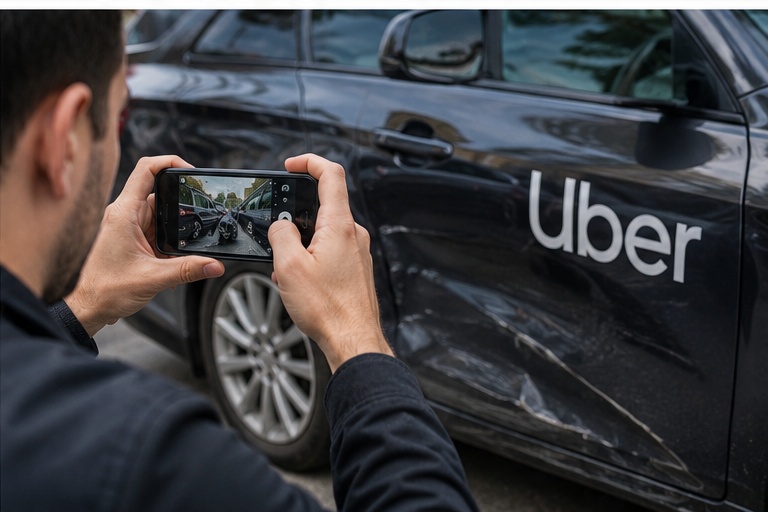
Important evidence can include app status, trip acceptance and completion times, GPS data, platform communications, receipts, driver identity, dash-camera footage, passenger messages, and platform records.
A passenger's ride receipt or screenshot can help establish timing, but formal platform records may be necessary when coverage is disputed.
Compensation and Damages
Potential damages depend on the facts and may include past medical expenses, reasonably necessary future medical care, past lost earnings, diminished future earning capacity, property damage where applicable, physical pain, mental suffering, physical impairment, and loss of enjoyment of life.
A responsible valuation should distinguish documented past losses from future projections and should account for liability risk, comparative fault, medical causation, credibility, treatment history, prognosis, and insurance limits.
What to Preserve After a Rideshare Crash
Keep the ride receipt, screenshots, driver identity, vehicle information, app communications, photographs, witness information, and medical records.
These materials can help establish the trip, timing, driver identity, platform activity, collision circumstances, and injuries.
How Safeguard Firm Can Help
Safeguard Firm's role in a Santa Barbara County Uber accident matter is to organize the claim around proof. That can include identifying responsible parties, preserving evidence, obtaining reports and records, communicating with insurers, documenting medical and economic losses, and evaluating whether experts are needed.
The investigation should focus on the issues most likely to be disputed. Liability cases may require video, physical evidence, witness testimony, or electronic data. Serious injury cases may require early policy-limit analysis, future medical evidence, vocational evidence, and investigation of additional defendants or commercial insurance.
When a fair pre-litigation resolution cannot be reached, filing suit can provide formal discovery, subpoenas, depositions, expert analysis, and court procedures for obtaining evidence. Litigation strategy should remain proportionate to the case.
Reporting and Insurance Follow-Up
Reporting an event through an app does not necessarily substitute for identifying and pursuing the correct insurance claim.
When litigation or filing becomes necessary, local resources include the Santa Barbara County Superior Court e-filing page, forms and filing information, and court locations.
Practical Steps After the Incident
- Seek appropriate medical evaluation and follow reasonable treatment recommendations.
- Preserve photographs, videos, damaged property, receipts, reports, witness information, and relevant electronic records.
- Avoid guessing about fault or the extent of injury in recorded or written statements.
- Keep records of medical appointments, work missed, out-of-pocket expenses, and communications with insurers.
- Identify evidence controlled by businesses, platforms, carriers, or public entities that may be overwritten or destroyed.
- Do not assume insurance negotiations extend a filing or government-claim deadline.
Frequently Asked Questions
PUC section 5433 requires $1 million in primary liability coverage from acceptance of a ride request through completion of the ride or transaction.
Yes. The statute now requires $60,000 per person and $300,000 per incident while a passenger is in the participating driver's vehicle.
The other driver's liability insurance is generally relevant, and TNC or UM/UIM coverage may also matter depending on the facts.
Different statutory limits apply during the logged-in waiting period, so app status should be verified.
Yes. It can help establish the trip, time, driver, and platform activity.
No. Insurance obligations and tort liability are distinct and require a fact-specific analysis.
Related Santa Barbara County Legal Services
Related representation for broader accident, negligence, insurance, and injury claims in Santa Barbara County.
Related representation for motor-vehicle collision claims in Santa Barbara County.
Related representation for collisions involving commercial trucks and other commercial vehicles.
Related representation for motorcycle collision and serious rider injury claims in Santa Barbara County.
Additional related resources: Santa Barbara County Bicycle Accident Attorney · Santa Barbara County Pedestrian Accident Attorney · California Personal Injury Attorney · About Safeguard Firm · Contact Safeguard Firm.
Contact a Santa Barbara County Uber Accident Attorney
Safeguard Firm serves injured clients throughout Santa Barbara County while maintaining its published office at 6404 Wilshire Blvd., Suite 860, Los Angeles, CA 90048. Call 310-882-6575, email JR@Safeguardfirm.com, or contact the firm online for a free consultation.