
San Diego County Supermarket Accident Attorney
Supermarket injury claims deserve focused treatment because grocery stores create recurring conditions that differ from many other premises cases: produce and liquids on floors, refrigeration leaks, high customer turnover, stocking activity, carts, pallets, displays, and merchandise stored overhead.
Safeguard Firm represents people injured in San Diego County supermarkets and grocery stores and focuses on evidence that often decides these claims: surveillance footage, inspection practices, sweep logs, employee knowledge, incident reports, photographs, maintenance records, and the source and duration of the hazard.
Free Consultation
If you were injured in San Diego County in a matter involving supermarket accident, contact Safeguard Firm at 310-882-6575 or JR@Safeguardfirm.com to discuss the circumstances and potential legal options.
Common Supermarket Accident Scenarios
Common Supermarket Accident Scenarios
Claims may involve spilled beverages, dropped produce, water from refrigeration or freezer cases, recently mopped floors, leaking equipment, broken surfaces, loose mats, boxes or pallets in aisles, falling merchandise, unstable displays, shopping-cart impacts, and hazards near entrances.
A supermarket claim is not limited to slipping. Customers can also be injured by stocking operations, carts, equipment, falling products, or unsafe parking and loading conditions.
Actual and Constructive Notice
Premises liability often turns on whether the store knew or should have known about the dangerous condition. A store may argue that a spill appeared moments before the accident and there was no reasonable opportunity to discover it.
Inspection frequency, sweep procedures, staffing, surveillance, employee observations, prior complaints, and evidence showing how long the condition existed can become central. California negligence principles include a general duty of ordinary care under Civil Code section 1714.
San Diego County Grocery Context
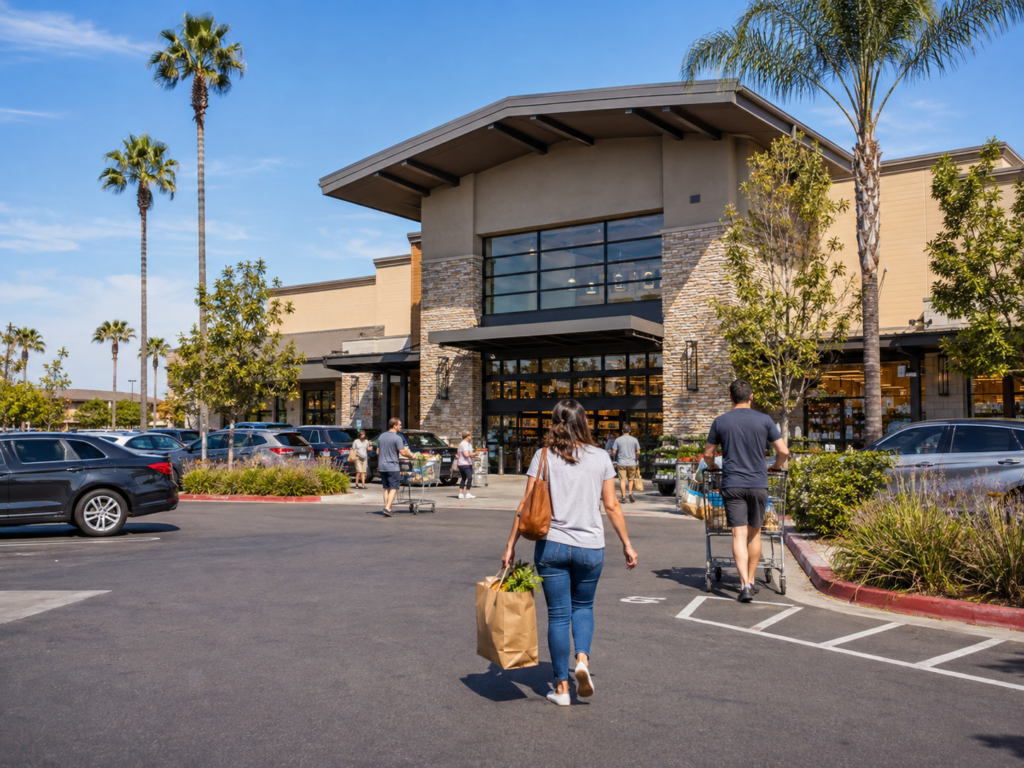
San Diego County has large supermarkets, warehouse-style food retailers, neighborhood grocers, specialty markets, and high-volume shopping centers throughout San Diego, Chula Vista, Oceanside, Escondido, Carlsbad, Vista, San Marcos, and surrounding communities.
Stores may use third-party janitorial, refrigeration, security, or merchandising contractors. The page should never imply affiliation with any grocery chain.
Sweep Logs and Inspection Records
Many stores use written or electronic inspection systems. Records may identify when an aisle was last checked, who performed the inspection, whether a hazard was recorded, and whether store procedures were followed.
A policy violation does not automatically establish negligence, and compliance does not automatically defeat liability.
Surveillance Preservation
Supermarkets commonly have numerous cameras. Relevant footage may include not only the fall but a meaningful period beforehand, showing when a spill appeared, whether employees passed nearby, and whether another customer created the condition.
A preservation request should identify the relevant area and time window.
Other Grocery Store Injuries
Falling merchandise cases can involve shelf height, stacking, display design, stocking practices, or customer interference. Cart injuries may involve employees, motorized carts, defective equipment, or congested aisles.
Recurring refrigeration leaks can raise maintenance and prior-notice questions different from a one-time customer spill.
Compensation and Damages
Potential damages depend on the facts and may include past medical expenses, reasonably necessary future medical care, past lost earnings, diminished future earning capacity, property damage where applicable, physical pain, mental suffering, physical impairment, and loss of enjoyment of life.
A responsible valuation should distinguish documented past losses from future projections and should account for liability risk, comparative fault, medical causation, credibility, treatment history, prognosis, and insurance limits.
How Safeguard Firm Can Help
Safeguard Firm’s role in a San Diego County supermarket accident matter is to organize the claim around proof. That can include identifying responsible parties, preserving evidence, obtaining reports and records, communicating with insurers, documenting medical and economic losses, and evaluating whether expert analysis is needed.
The investigation should focus on the issues most likely to become disputed. Liability cases may require scene evidence, witness testimony, surveillance, electronic vehicle data, or commercial records. Serious injury cases may require early policy-limit analysis, future-care evidence, vocational analysis, and investigation of additional defendants or coverage.
When a fair pre-litigation resolution cannot be reached, litigation can provide formal discovery, subpoenas, depositions, expert analysis, and court procedures for obtaining evidence. See the San Diego Superior Court civil e-filing resource, the e-filing overview, and civil forms. Strategy should remain proportionate to the case.
Practical Steps After the Incident
- Seek appropriate medical evaluation and follow reasonable treatment recommendations.
- Preserve photographs, videos, damaged property, receipts, reports, witness information, and relevant electronic records.
- Avoid guessing about fault or the extent of injury in recorded or written statements.
- Keep records of medical appointments, work missed, out-of-pocket expenses, and communications with insurers.
- Identify evidence controlled by businesses, platforms, carriers, or public entities that may be overwritten or destroyed.
- Do not assume insurance negotiations extend a filing deadline or government-claim deadline.
Frequently Asked Questions
No. Liability generally requires proof of a dangerous condition and a basis to show the store failed to use reasonable care, including notice where required.
They are written or electronic records some stores use to document aisle or floor inspections. Their existence and meaning vary by retailer.
It may show how the hazard arose, how long it existed, whether employees encountered it, and the mechanics of the accident.
The store may still be liable if it had actual or constructive notice and failed to respond reasonably, but timing becomes critical.
Potentially. The analysis can involve stacking, shelving, display design, stocking practices, employee conduct, and notice.
Yes. A receipt can help establish presence and timing, while photographs, witness information, footwear, and incident documentation may also be useful.
Related San Diego County Legal Services
Countywide personal injury representation and related claim information.
Related representation for motor-vehicle collision claims in San Diego County.
Related representation for commercial truck and freight collision claims.
Related representation for injured motorcyclists and roadway collision claims.
Additional related resources: San Diego County Bicycle Accident Attorney · San Diego County Pedestrian Accident Attorney · California Personal Injury Attorney · About Safeguard Firm · Contact Safeguard Firm
Contact a San Diego County Supermarket Accident Attorney
Safeguard Firm serves injured clients throughout San Diego County while maintaining its published office at 6404 Wilshire Blvd., Suite 860, Los Angeles, CA 90048. Call 310-882-6575, email JR@Safeguardfirm.com, or contact the firm online for a free consultation. Do not add or imply a San Diego County office unless a verified location is established.