
California Dog Bite Attorney
A dog bite can cause more than a puncture wound. Victims may face infection risk, nerve or tendon injury, fractures, permanent scarring, facial injuries, psychological effects, time away from work, and the prospect of reconstructive or scar-revision treatment. Children can be especially vulnerable to facial and emotional injuries because of their height and proximity to a dog’s head.
California has a specific dog-bite statute that can make an owner liable without requiring the injured person to prove that the dog had bitten someone before or that the owner knew the dog was dangerous. That rule makes dog-bite cases legally distinct from many ordinary negligence claims.
Safeguard Firm represents people injured in dog-bite and dog-attack matters involving incidents at homes, apartment communities, parks, sidewalks, businesses, rental properties, and other locations in communities throughout California. The firm’s published office is at 6404 Wilshire Blvd., Suite 860, Los Angeles, CA 90048, and its website currently advertises a free consultation.
Free Consultation
If you or a family member was injured by a dog in California, contact Safeguard Firm at 310-882-6575 or JR@Safeguardfirm.com to discuss the incident, available insurance, evidence, and potential claims.
California's Strict-Liability Dog Bite Law
California Civil Code section 3342 generally makes a dog owner liable for damages suffered by a person bitten by the dog while in a public place or lawfully in a private place, including the owner’s property. The statute applies regardless of the dog’s former viciousness or the owner’s knowledge of that viciousness.
This means a victim generally does not need to prove a prior bite or a so-called “one free bite” before pursuing the dog owner under section 3342. The key questions commonly include whether an actual bite occurred, whether the defendant owned the dog, whether the victim was in a public place or lawfully on private property, causation, and damages.
Strict liability under section 3342 is directed at the dog owner. Other defendants require their own legal basis for liability and should not be added merely because they were connected to the location.
Dog Attacks Without a Bite
Not every serious dog injury involves teeth breaking the skin. A person may be knocked down, chased into traffic, pulled from a bicycle, or injured while escaping an attacking dog.
Civil Code section 3342 is specifically a dog-bite statute. A non-bite dog-attack claim may instead depend on negligence or another applicable theory, including what the responsible person knew, what control they had over the dog, and whether reasonable precautions were taken.
Who May Be Responsible?
The dog owner is the principal defendant in a statutory bite claim. Depending on the facts, additional liability theories may involve a person who possessed or controlled the dog, an employer, a business, or a property owner or landlord with a legally sufficient basis for responsibility.
Ownership records, licenses, veterinary records, leases, insurance policies, witness statements, and animal-control records may help clarify responsibility.
California Dog Bite Claims: Statewide Law, Local Reporting
California’s statewide strict-liability rule applies across the state, while bite reporting and animal-control procedures are administered locally.
The California Department of Public Health animal-bite guidance advises that animal bites, especially dog bites, should be reported to the local animal-control agency. California regulations also require bites from mammals susceptible to rabies to be reported to the local health officer.
For website accuracy, users should be directed to the agency responsible for the location of the incident because city-specific jurisdiction can differ.
Scarring, Disfigurement, and Future Care
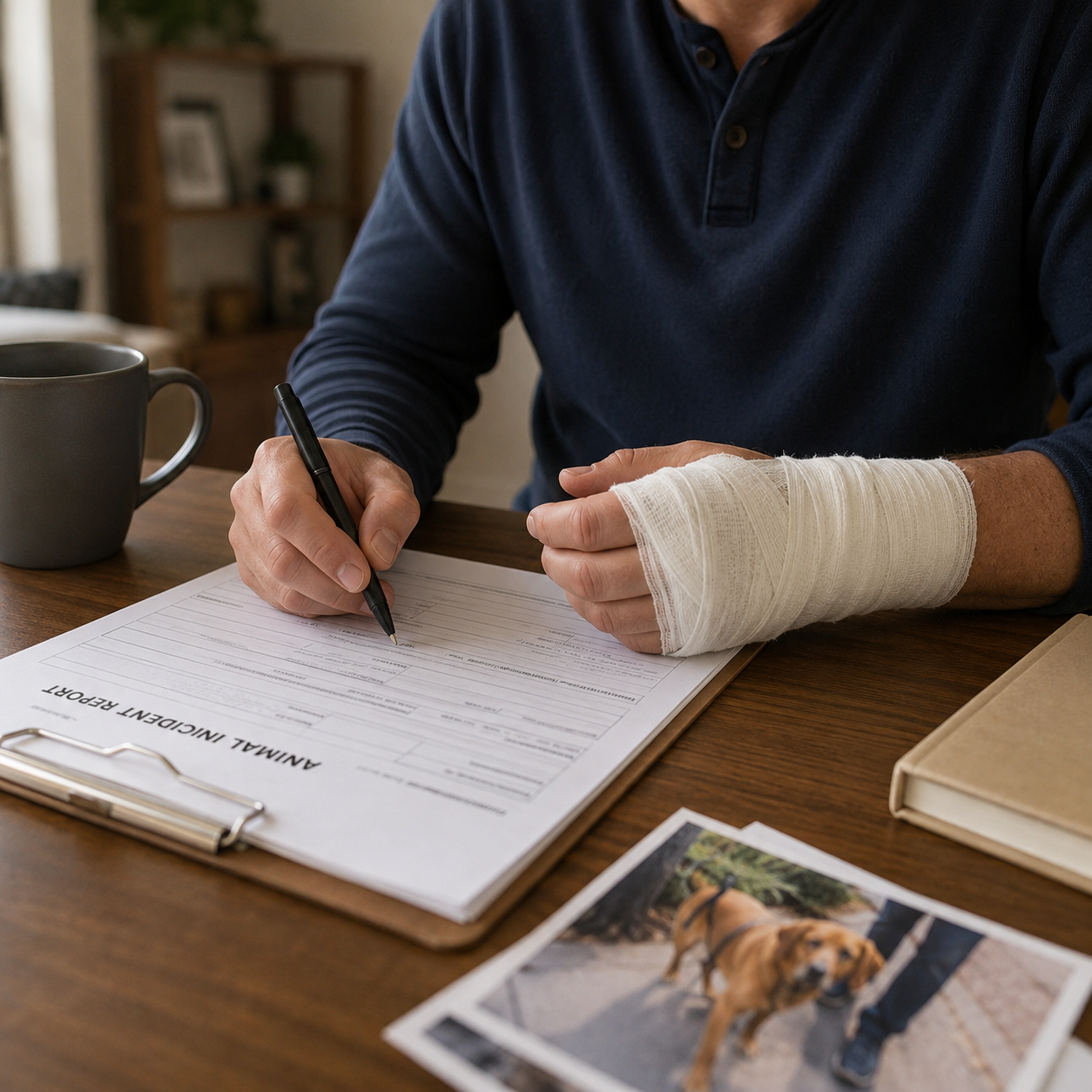
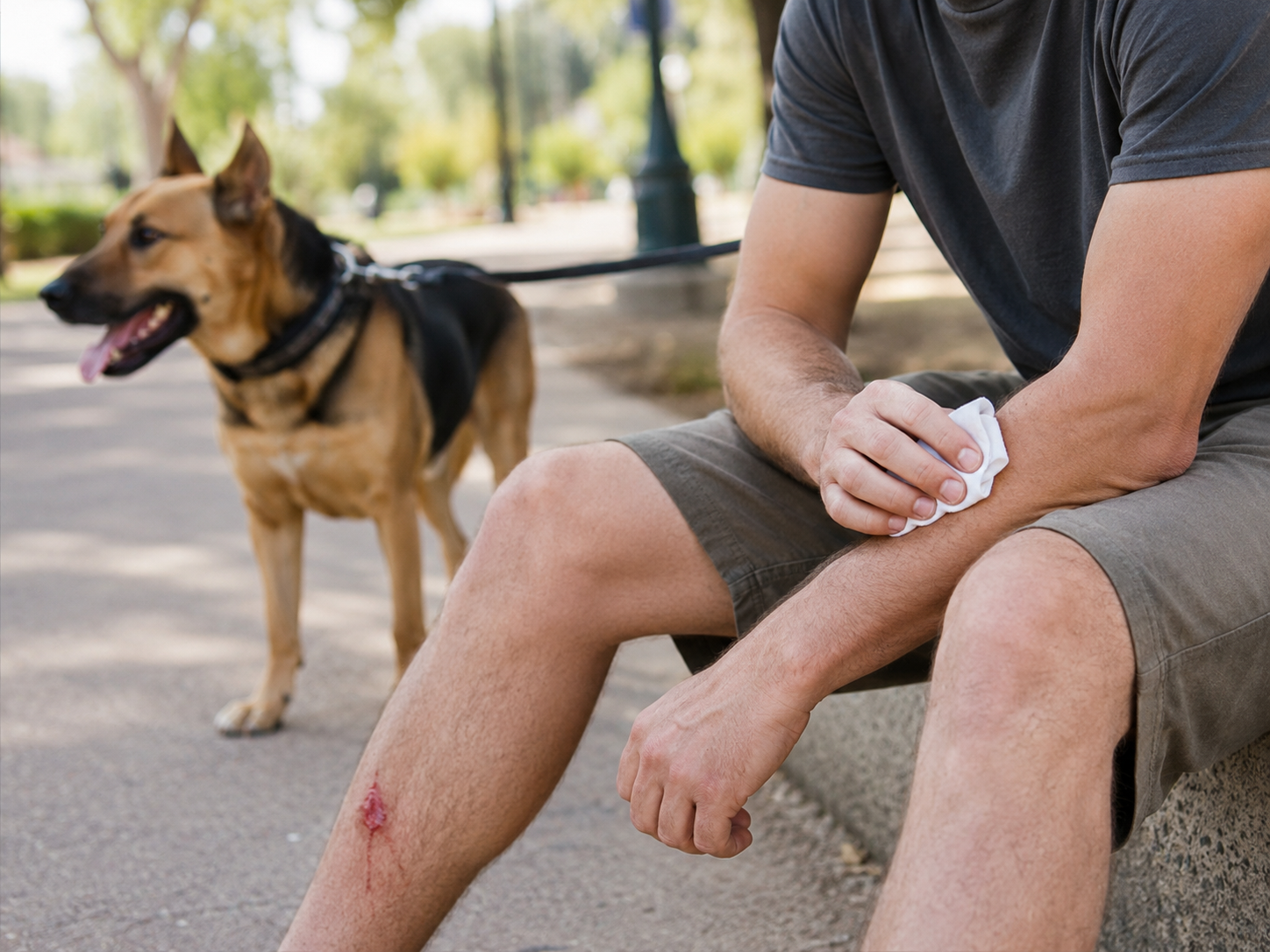
Dog-bite scars may involve the face, arms, hands, legs, or other visible areas. Treatment can include wound care, plastic-surgery evaluation, scar management, injections, laser treatment, revision surgery, or other medically supported care.
Future treatment should be supported by medical evidence. Photographs taken over time can help document how the scar changed and whether redness, thickness, pigmentation, contracture, or functional limitation persisted.
Comparative Fault and Defense Arguments
A dog owner or insurer may argue that the injured person provoked the dog, ignored a warning, entered property unlawfully, assumed a risk, or otherwise contributed to the incident. Those defenses are fact-specific.
The claim should document what happened immediately before the bite, the victim’s reason for being at the location, any warnings or lack of warnings, the dog’s restraint, witnesses, and the victim’s age and ability to understand the situation.
Evidence to Preserve After a Dog Bite
Photograph the injuries as soon as reasonably possible and continue documenting healing, sutures, bruising, swelling, scarring, and changes in appearance.
Other useful evidence may include the dog owner’s identity, photographs or video of the dog, animal-control reports, witness information, veterinary or vaccination information when obtainable, clothing, scene photographs, surveillance, emergency records, and communications with the owner or insurer.
Homeowners, Renters, and Other Insurance
Dog-bite claims are frequently handled through liability insurance rather than direct payment by an individual owner. Depending on the facts and policy terms, potential coverage can include homeowners insurance, renters insurance, landlord-related coverage, or other liability policies.
Coverage should be investigated rather than assumed because some policies contain animal-related exclusions, breed restrictions, sublimits, or other coverage disputes.
Reporting the Bite and Rabies Considerations
California public-health rabies guidance can help local officials assess vaccination status, quarantine or observation requirements, and whether additional rabies-related medical action is indicated. A civil claim and an animal-control or public-health investigation are different processes, but reporting can create important contemporaneous documentation.
Dog Bites Involving Children
Children may suffer facial wounds, lip or eyelid injuries, dental trauma, nerve damage, scarring, and emotional consequences that require long-term evaluation. Future growth can also affect how scars develop and how reconstructive care is planned.
A child’s claim should be evaluated with attention to future treatment, scar maturation, psychological effects, and procedural requirements applicable to minors. Settlement of a minor’s claim may require court approval under California law.
Damages in a California Dog Bite Claim
Depending on the facts, recoverable damages may include past medical expenses, reasonably necessary future medical care, lost earnings, diminished earning capacity, physical pain, mental suffering, scarring, disfigurement, physical impairment, and loss of enjoyment of life.
A serious dog-bite case should not be valued solely by the amount of the emergency-room bill. Permanent scarring, nerve damage, hand function, psychological injury, future plastic surgery, and the effect on work or daily life can materially change the analysis.
How Safeguard Firm Can Help
A dog-bite claim should be organized around ownership, the circumstances of the bite, the victim’s lawful presence, insurance, injuries, and long-term consequences. Safeguard Firm can evaluate those issues, communicate with insurers, preserve important evidence, and assess whether additional defendants or negligence theories are supported.
Where injuries involve significant scarring, nerve damage, orthopedic injury, psychological trauma, or future reconstructive care, the claim may require medical records, photographs over time, specialist opinions, future-care evidence, wage documentation, and careful policy-limit analysis.
If a fair resolution cannot be reached, litigation can provide formal discovery, subpoenas, depositions, expert discovery, and court procedures for obtaining insurance, ownership, medical, property, and animal-related evidence.
California Filing Deadlines
Code of Civil Procedure section 335.1 generally provides two years for an action for injury caused by another’s wrongful act or neglect. Different accrual, tolling, minor, government-claim, or other rules can affect the deadline in a particular case.
If a public entity, public employee, or government-operated facility is potentially involved, Government Code section 911.2 may require much earlier action. Insurance discussions do not automatically extend a statutory deadline.
What to Do After a Dog Bite
- Obtain appropriate medical evaluation, particularly for deep punctures, facial wounds, hand injuries, signs of infection, or significant bleeding.
- Report the bite to the appropriate local animal-control or public-health authority.
- Identify the dog and owner, and preserve any available license, vaccination, or contact information.
- Photograph injuries immediately and throughout the healing process.
- Preserve clothing, video, witness information, messages, and any incident or animal-control reports.
- Do not post unnecessary details about the incident, injuries, or claim on social media.
- Keep records of medical care, prescriptions, missed work, out-of-pocket costs, and recommendations for scar or reconstructive treatment.
- Do not assume an insurer will preserve evidence or protect the filing deadline.
Frequently Asked Questions
Civil Code section 3342 generally does not require proof that the dog previously bit someone or that the owner knew the dog was vicious. The victim must still satisfy the statute’s other requirements.
Section 3342 can apply on private property when the victim was lawfully there, including by express or implied invitation or while performing a legal duty.
The strict-liability bite statute may not apply to a non-bite injury, but a negligence claim may exist depending on control of the dog, foreseeability, and the surrounding facts.
Scarring and disfigurement can be important components of damages. Medical photographs, plastic-surgery opinions, scar maturation, location, and permanency can all matter.
Children can have significant facial, psychological, and future-treatment issues. Minor settlements may also require court approval.
It often may, but coverage depends on the policy. Animal exclusions, breed restrictions, policy limits, and the insured’s relationship to the dog should be reviewed.
California public-health guidance advises reporting animal bites, especially dog bites, to the local animal-control agency. The responsible agency depends on where the incident occurred.
Many California injury actions are generally subject to a two-year limitations period, but tolling, minors, government claims, and other circumstances can change the deadline.
Related California Dog Bite and Injury Resources
Statewide personal injury information for California negligence and injury claims.
County-specific dog bite guidance for Los Angeles County incidents.
County-specific dog bite information for Orange County victims and families.
County-specific dog bite guidance for Ventura County incidents.
Additional related resources: California Dog Bite Attorney · Riverside County Dog Bite Attorney · San Bernardino County Dog Bite Attorney · San Diego County Dog Bite Attorney · Santa Barbara County Dog Bite Attorney · Kern County Dog Bite Attorney · San Luis Obispo County Dog Bite Attorney · Imperial County Dog Bite Attorney · About Safeguard Firm · Contact Safeguard Firm.
Contact a California Dog Bite Attorney
Safeguard Firm represents dog-bite victims in California. The firm’s published office is 6404 Wilshire Blvd., Suite 860, Los Angeles, CA 90048. Call 310-882-6575, email JR@Safeguardfirm.com, or contact the firm online for a free consultation.