
Los Angeles County Slip and Fall Attorney
A slip-and-fall or trip-and-fall claim is not established merely because someone fell on another person’s property. California premises-liability cases typically require proof of a dangerous condition, the defendant’s legal responsibility for the property, notice or other basis for fault, causation, and damages.
Safeguard Firm represents people injured by dangerous property conditions throughout Los Angeles County. The firm investigates the condition itself, who controlled the premises, how long the hazard existed, inspection and maintenance practices, prior complaints, surveillance, incident reports, photographs, witness testimony, and medical evidence.
Premises cases are evidence-sensitive. A spill can be cleaned, a broken surface can be repaired, surveillance can be overwritten, and inspection records can be difficult to obtain later. The condition should be documented as early as reasonably possible.
Free Consultation
If you were injured in Los Angeles County because of a dangerous property condition, contact Safeguard Firm at 310-882-6575 or JR@Safeguardfirm.com to discuss the circumstances, potential defendants, evidence, insurance coverage, and applicable deadlines.
California Premises Liability and Notice
California premises liability is grounded in negligence principles, including the general rule reflected in California Civil Code section 1714. A property owner, occupier, manager, or business may owe reasonable-care duties concerning conditions within its control, but liability depends on the circumstances.
Notice is often central. If a business created the dangerous condition, proof of creation may establish knowledge. If the hazard was created by a customer or unknown person, the claimant may need evidence that the condition existed long enough that a reasonable inspection system should have discovered it.
Inspection procedures, sweep logs, employee assignments, surveillance, cleaning records, maintenance tickets, and witness testimony can therefore become critical evidence. The existence of a written policy is only part of the analysis; whether the policy was actually followed can matter just as much.
Proving the Injury Was Caused by the Fall
Premises-liability defendants may dispute both fault and medical causation. The defense may argue that the condition was open and obvious, the claimant was distracted, footwear contributed, the fall occurred for another reason, or the medical condition was preexisting.
Photographs, contemporaneous symptoms, medical records, witness testimony, and objective findings can help connect the incident to the claimed injury. When surgery, fracture, brain injury, or other serious trauma occurs, long-term prognosis and future care may become important.
Comparative fault can reduce damages if a claimant’s own lack of reasonable care contributed, but it does not automatically excuse an unsafe condition.
Damages in a Slip and Fall Case
Potential damages can include emergency care, orthopedic treatment, surgery, rehabilitation, future medical care, lost earnings, reduced earning capacity, pain, emotional distress, scarring, physical impairment, and loss of enjoyment of life where supported. Severe, lasting injuries may also require the broader future-damages analysis discussed in catastrophic injury claims.
Falls commonly cause wrist, shoulder, ankle, knee, hip, back, neck, head, and facial injuries. Older adults may suffer fractures with substantial recovery periods, while working adults may experience significant wage loss even from injuries that eventually heal.
A claim should reflect the actual medical course and functional impact rather than a generic value assigned to the word ‘fall.’
Slip, Trip and Fall Conditions We Investigate
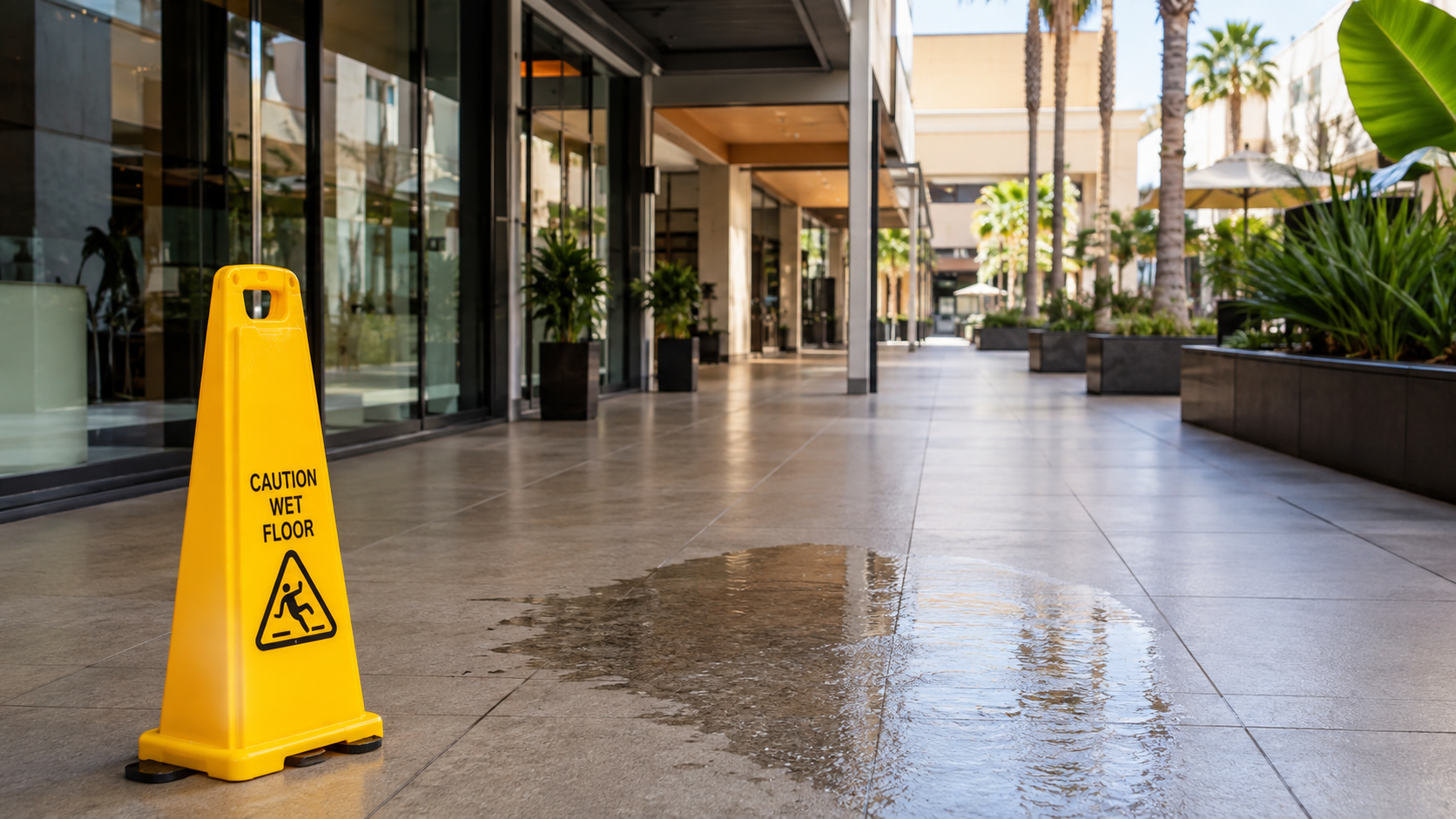
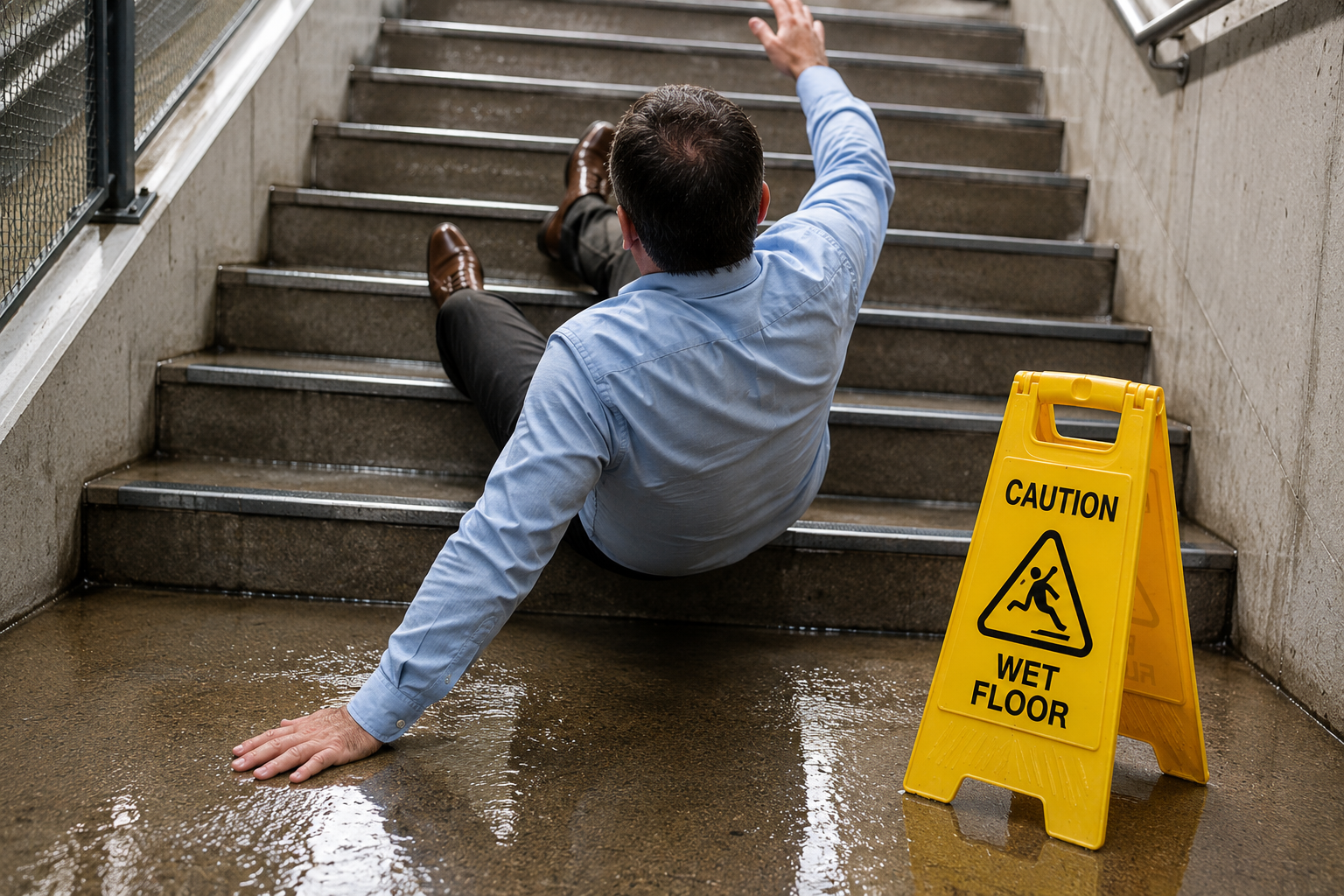
Claims may involve wet floors, spilled liquids, produce or debris, recently mopped surfaces, leaks, uneven flooring, broken tiles, defective stairs, missing or loose handrails, potholes, unsafe parking areas, sidewalk defects, poor lighting, merchandise or cords in walkways, and abrupt changes in elevation. Grocery-store hazards may also overlap with Los Angeles County supermarket accident claims.
Different hazards require different proof. A transient spill may turn on how long it existed and whether reasonable inspections would have discovered it. A structural defect may be shown through photographs, measurements, maintenance history, building records, or prior complaints.
Falls can also occur in apartment properties, hotels, restaurants, stores, office buildings, parking facilities, entertainment venues, and private residences. Control and responsibility must be evaluated for the specific premises.
Why Surveillance and Incident Records Matter
Retailers, apartment buildings, hotels, and commercial properties may have surveillance showing the hazard, how it developed, employee activity, prior foot traffic, or the fall itself. Video can be overwritten quickly under ordinary retention practices.
Incident reports may identify witnesses, employee observations, photographs, statements, and the condition as it appeared immediately after the event. A claimant should avoid assuming the business will voluntarily preserve every record simply because an incident was reported.
A preservation request can identify video, inspection records, cleaning schedules, maintenance materials, prior complaints, and other relevant evidence before routine destruction occurs.
Public Property and Government Claims
A fall on a public sidewalk, government building, transit facility, park, or other public property may involve California’s Government Claims Act and specialized public-entity liability rules. Government Code section 911.2 generally requires an injury claim to be presented within six months.
Public-property cases can involve additional issues such as ownership, control, statutory immunities, notice, design, maintenance, and whether another private entity shared responsibility.
Los Angeles County Premises Claims
Los Angeles County includes dense retail districts, shopping centers, apartment communities, hotels, restaurants, entertainment venues, office properties, parking structures, and public spaces.
The relevant defendant may be an owner, tenant, manager, maintenance contractor, vendor, or multiple parties. Identifying control and responsibility can be as important as documenting the dangerous condition itself.
Venue and Litigation in Los Angeles County
When suit is necessary, venue, discovery, and litigation proceed through Los Angeles Superior Court subject to current rules and case assignment procedures.
The proper parties, filing location, discovery strategy, and evidence needs depend on the facts of the particular premises-liability claim.
Why Choose Safeguard Firm
Safeguard Firm approaches personal injury claims by developing the liability, insurance, and damages evidence together. The firm communicates directly with carriers, organizes the proof necessary to evaluate the claim, and prepares matters for litigation when negotiation does not produce a fair resolution.
The firm does not rely on unsupported claims about a particular number of prior cases, guaranteed outcomes, or invented case results. The emphasis is on careful investigation, client communication, California-law analysis, and presenting each client’s actual losses with credible supporting evidence.
Safeguard Firm’s Los Angeles office is located at 6404 Wilshire Blvd., Suite 860, Los Angeles, CA 90048. Prospective clients may call 310-882-6575 or contact the firm online.
Frequently Asked Questions
No. A claimant generally must prove negligence, including a dangerous condition and a basis for holding the defendant responsible.
Surveillance, inspection records, employee testimony, witness accounts and the physical condition of the spill may provide evidence.
Open-and-obvious issues can affect duty and comparative fault, but they do not automatically resolve every premises-liability claim.
Accurate reporting can document the event, but claimants should avoid speculation and should keep or request a copy when possible.
Repairs may change the scene, which is why early photographs and measurements are important. Evidentiary rules govern how later repairs may be used in litigation.
The general California injury limitations period is often two years under Code of Civil Procedure section 335.1, but public-entity claims and other circumstances can impose shorter deadlines.
Related Slip and Fall Legal Services
Related representation for Los Angeles County negligence and injury claims involving liability, insurance, damages, and litigation.
Related representation for grocery and supermarket incidents involving spills, inspections, surveillance, and store notice.
Related representation when a fall causes permanent disability, major future-care needs, or other life-changing injuries.
Statewide California guidance and representation for slip, trip, fall, and premises-liability claims.
Additional related resources: Brain Injury Attorney · Spinal Cord Injury Attorney · Contact Safeguard Firm.
Contact Safeguard Firm
If you or a family member has been affected by this type of incident in Los Angeles County, contact Safeguard Firm to discuss the facts, potential defendants, insurance coverage, evidence, and applicable deadlines. Call 310-882-6575, email JR@Safeguardfirm.com, or request a free consultation online.