
Los Angeles County Supermarket Accident Attorney
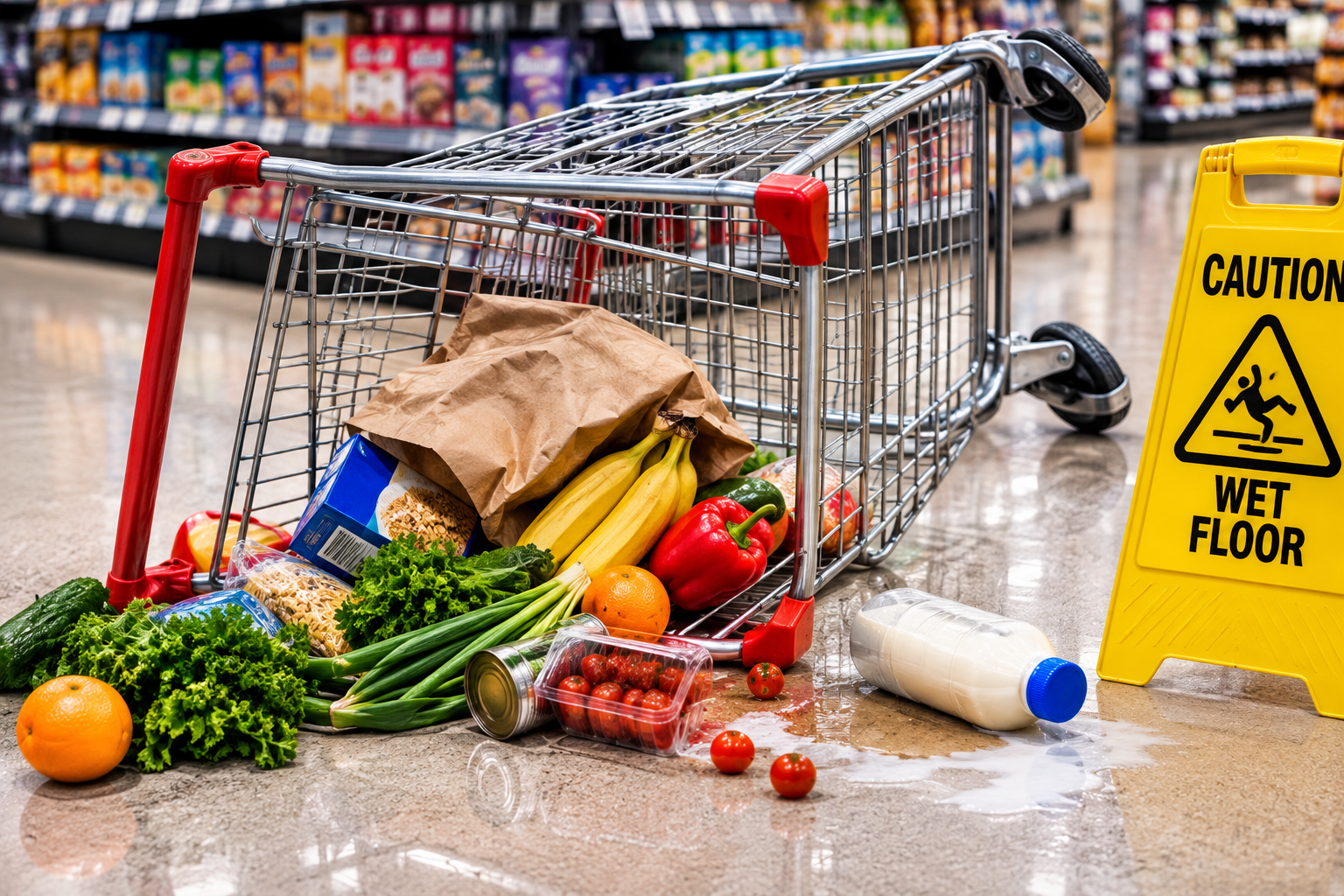
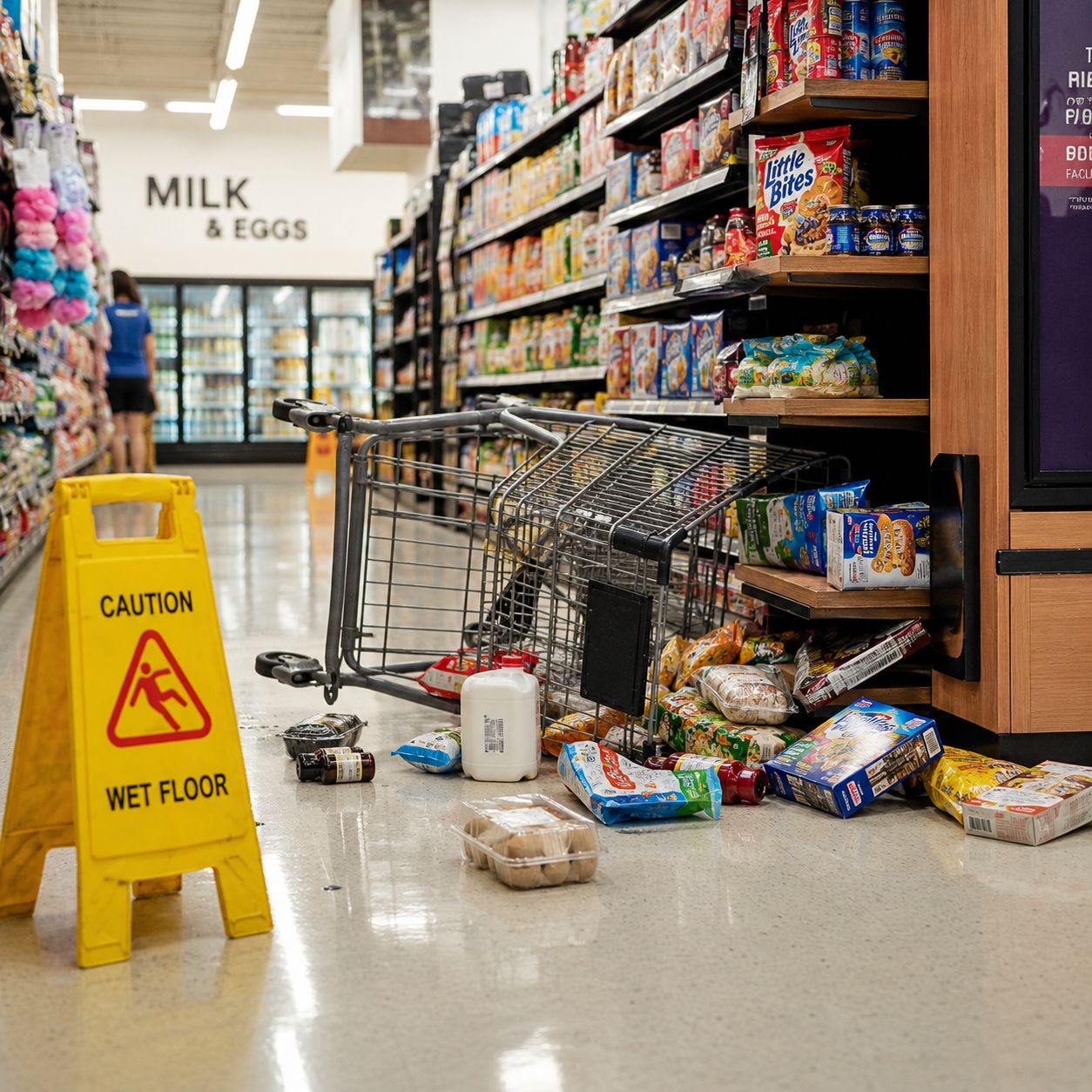
Supermarkets create a distinctive premises-liability environment. Customers move through produce areas, refrigerated sections, checkout lanes, beverage aisles, entrances, parking lots, and displays while employees constantly stock, clean, inspect, and move merchandise. Spills and debris can appear quickly, which makes the store’s inspection and response procedures central to many claims.
Safeguard Firm represents people injured in supermarket and grocery-store accidents throughout Los Angeles County. The investigation focuses on what the dangerous condition was, who created it, how long it existed, what employees knew, what inspections occurred, whether surveillance captured the condition, and whether reasonable precautions would have prevented the injury.
Free Consultation
Injured in Los Angeles County? Contact Safeguard Firm at 310-882-6575 or JR@Safeguardfirm.com for a free consultation about your potential claim.
Inspection Practices
Many supermarket cases turn on written inspection intervals, electronic checks, paper sweep logs, zone assignments, or employee responsibilities for monitoring aisles. Records and testimony can show whether the store’s inspection system was actually followed.
Notice and Store-Created Hazards
Notice may depend on how long a condition existed and whether a reasonable inspection should have discovered it. If an employee created the hazard during stocking or cleaning, the notice analysis may differ from a spill caused by an unknown customer.
Inspection and Sweep Evidence
Many supermarket cases turn on inspection practices. A store may have written inspection intervals, electronic checks, paper sweep logs, zone assignments, or employee responsibilities for monitoring aisles.
The existence of a policy does not prove it was followed. Timestamped records, surveillance, staffing evidence, employee testimony, and the physical condition of the hazard can show whether inspections actually occurred and whether they were reasonable under the circumstances.
If the hazard was created by an employee—for example, a leak caused during stocking or a condition left after cleaning—the notice analysis may differ from a spill created by an unknown customer.
Surveillance Video Can Be Critical
Supermarkets commonly use extensive camera systems, but camera placement, retention periods, and image quality vary. Useful footage may show when the substance first appeared, employee activity, prior customer reactions, inspections, the fall itself, and post-incident cleanup.
A claimant should not assume the store will preserve hours of footage before and after an incident without a specific request. The most valuable video may be the period showing how long the condition existed—not only the moment of the fall.
Other evidence may include photographs taken by employees, customer or witness videos, incident reports, first-aid records, maintenance tickets, refrigeration service records, and prior complaints about the same area.
Notice and California Premises Liability
California Civil Code section 1714 provides an important negligence framework for California premises-liability claims. The analysis generally focuses on control of the property, the dangerous condition, notice or creation, causation, and damages.
In a transient-spill case, constructive notice may depend on whether the condition existed long enough that a reasonable inspection system should have discovered it. Store defendants may argue the hazard appeared only moments before the incident, while a claimant may rely on surveillance, inspection gaps, recurring-condition evidence, or proof that an employee created or observed the hazard.
Comparative fault can also arise if the defense contends the customer failed to watch where they were walking. The visibility of the condition, lighting, floor pattern, merchandise displays, customer traffic, and the circumstances of the aisle may all matter.
Injuries and Compensation
Supermarket falls can cause wrist, shoulder, elbow, hip, knee, ankle, back, neck, head, and facial injuries. Falling merchandise can cause head or upper-body trauma. Cart or equipment impacts may cause crush or orthopedic injuries.
Potential damages include reasonable medical expenses, future treatment, lost earnings, reduced earning capacity, pain, emotional distress, physical impairment, scarring, and other compensable losses.
An injury that initially appears minor may become more significant if imaging later reveals a fracture, tear, disc injury, or other objective condition. Accurate medical evaluation and continuity of records can be important to causation.
Los Angeles County Supermarket Claims and Deadlines
Los Angeles County has supermarkets ranging from small neighborhood groceries to large warehouse-style retailers and national chains. The responsible entities may include the store operator, property owner, maintenance contractor, refrigeration vendor, security or cleaning contractor, or others depending on the hazard.
Code of Civil Procedure section 335.1 generally provides a two-year personal injury limitations period, but public-property involvement or other special circumstances can create different deadlines. Where a government claim may be involved, Government Code section 911.2 may also be relevant.
For local civil-court information, see the Los Angeles Superior Court civil resources.
Why Choose Safeguard Firm
Safeguard Firm approaches personal injury claims by developing the liability, insurance, and damages evidence together. The firm communicates directly with carriers, organizes the proof necessary to evaluate the claim, and prepares matters for litigation when negotiation does not produce a fair resolution.
The firm does not rely on unsupported claims about a particular number of prior cases, guaranteed outcomes, or invented case results. The emphasis is on careful investigation, client communication, California-law analysis, and presenting each client’s actual losses with credible supporting evidence.
Safeguard Firm’s Los Angeles office is located at 6404 Wilshire Blvd., Suite 860, Los Angeles, CA 90048. Prospective clients may call 310-882-6575 or contact the firm online.
Common Supermarket Hazards
Frequent hazards include spilled liquids, dropped produce, crushed grapes or food, leaking refrigeration cases, melting ice, recently mopped floors, broken containers, debris, unsafe mats, damaged flooring, pallets or stocking equipment, merchandise protruding into walkways, falling goods, and hazards in parking lots or entrances.
Produce and refrigerated sections can create recurring moisture risks. Checkout areas can accumulate small items or liquids. Stocking operations may temporarily obstruct aisles or create tripping hazards. The legal issue is whether the specific condition was unreasonably dangerous and whether the store had a legally sufficient opportunity or reason to address it.
Not every store injury is a fall. Customers can also be injured by falling merchandise, shopping carts, defective fixtures, unstable displays, negligent stocking, or equipment operated by employees.
What to Do After a Grocery Store Accident
Report the event accurately to store management, identify the exact location, photograph the hazard and surrounding area if safely possible, preserve the clothing and shoes involved, obtain witness contact information, and seek appropriate medical evaluation.
If an incident report is completed, request a copy. Avoid signing a broad release or settlement document before understanding its effect. If the store contacts the customer for a statement, the customer should understand the purpose and scope of the request.
Counsel can promptly request preservation of surveillance and operational records before routine deletion or destruction.
Frequently Asked Questions
It is a record used by some retailers to document inspections or cleaning of store areas. Its usefulness depends on how the store’s system actually operated and whether the entries are reliable.
Surveillance, inspection gaps, witness observations, employee activity and the physical appearance of the condition may provide evidence.
The store may still be liable if it had actual or constructive notice and a reasonable opportunity to correct or warn of the condition.
Evidence that an employee created the condition can materially affect the notice analysis.
A prompt written preservation request can be important. Counsel can identify the relevant time window and categories of video and records.
No. Claims can also involve falling merchandise, stocking equipment, carts, defective fixtures, unsafe displays, parking areas and other conditions.
Related Los Angeles County Legal Services
Related representation for personal injury claims throughout Los Angeles County.
Related representation for slip-and-fall and premises-liability claims in Los Angeles County.
Related representation for severe and life-changing injury claims in Los Angeles County.
Statewide information for supermarket and grocery-store accident claims in California.
Additional resource: Contact Safeguard Firm.
Contact Safeguard Firm
If you or a family member has been affected by this type of incident in Los Angeles County, contact Safeguard Firm to discuss the facts, potential defendants, insurance coverage, evidence, and applicable deadlines. Call 310-882-6575, email JR@Safeguardfirm.com, or request a free consultation online.