
Riverside County Truck Accident Attorney
Riverside County is a major passenger and commercial transportation region. Freight and delivery traffic moves through I-10, I-15, I-215, SR-60, and warehouse and logistics areas serving western Riverside County and the Inland Empire.
Safeguard Firm treats Riverside County truck accidents as commercial-liability investigations. The inquiry may extend beyond the driver to a carrier, employer, owner, broker, shipper, loading company, maintenance contractor, warehouse operator, delivery contractor, or other commercial entity when the facts support doing so.
Free Consultation
If you were injured in Riverside County in a matter involving Riverside County truck accident, contact Safeguard Firm at 310-882-6575 or JR@Safeguardfirm.com to discuss the circumstances and potential legal options.
Potentially Responsible Parties
- Depending on the relationship among the people and companies involved, responsible parties may include the truck driver, motor carrier, employer, owner of the tractor or trailer, maintenance contractor, cargo-loading entity, shipper, broker, delivery contractor, or manufacturer.
- Corporate branding on a truck does not by itself prove which entity employed the driver or owned the vehicle. Contracts, registration records, insurance documents, dispatch records, and federal or state motor-carrier information may be needed.
Common Causes of Riverside County Truck Accidents
- Commercial crashes may involve fatigue, unsafe lane changes, excessive speed for traffic conditions, following too closely, distracted driving, inadequate training, negligent hiring or supervision, improper maintenance, brake or tire problems, overloaded or unsecured cargo, backing collisions, wide turns, or unsafe delivery practices.
- Riverside County delivery activity adds another category: box trucks, vans, moving trucks, parcel carriers, grocery delivery vehicles, and other commercial fleets operating in residential and commercial areas.
Freight, Warehousing and Delivery Traffic in Riverside County
Riverside County truck traffic includes long-haul freight, warehouse and distribution activity, parcel and grocery delivery fleets, construction trucks, tankers, agricultural hauling, and commercial vehicles traveling between Inland Empire logistics centers and regional freeways.
Branding on a truck does not necessarily identify the correct employer, carrier, contractor, broker, owner, or shipper. Contracts, registration records, USDOT information, dispatch materials, bills of lading, maintenance records, and insurance documents may be needed to identify responsible entities.
Evidence to Preserve After a Commercial Truck Crash
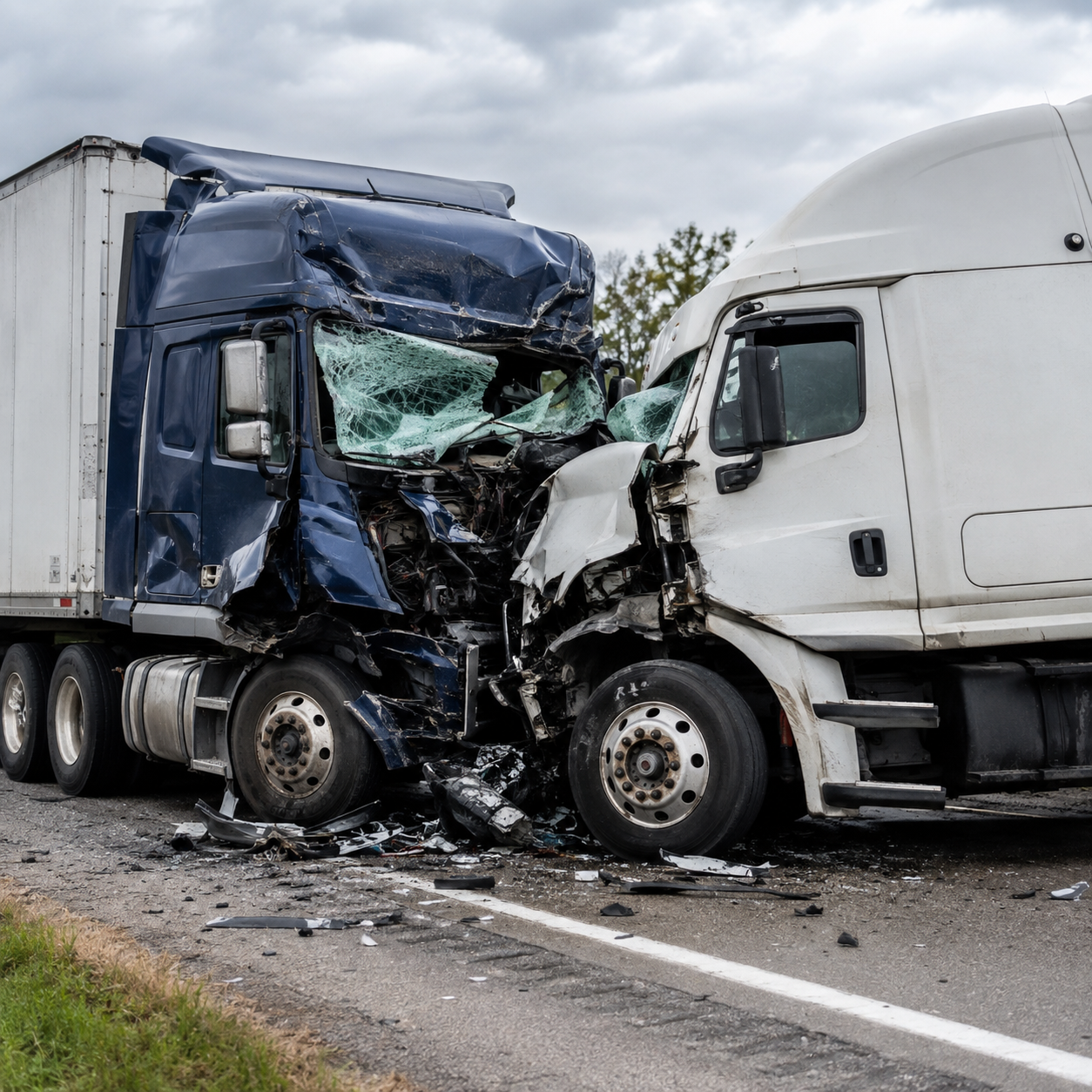
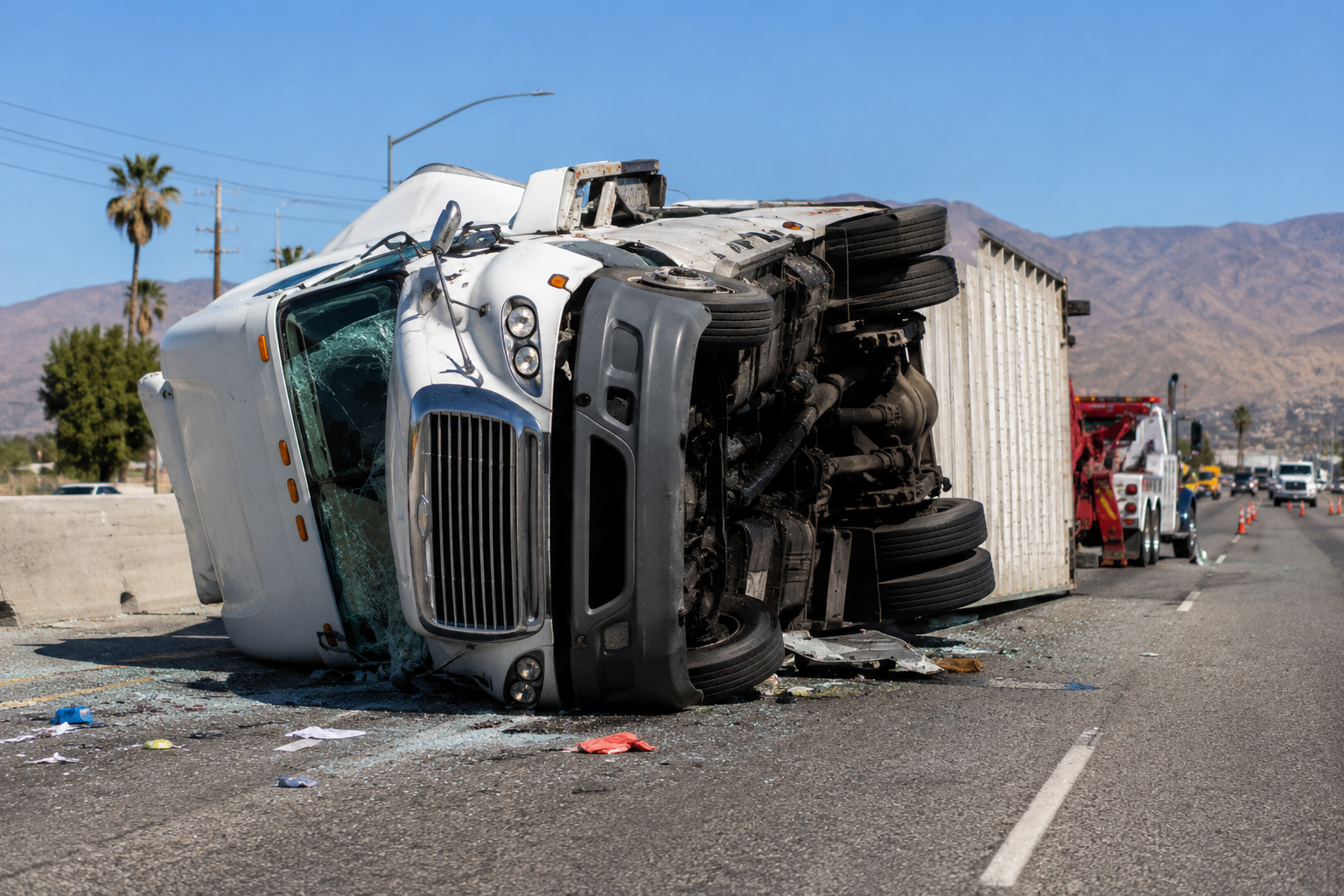
Important evidence can include driver logs, electronic logging device records, hours-of-service information, vehicle inspection reports, maintenance records, driver qualification files, dispatch communications, onboard camera footage, telematics, event data recorder material, bills of lading, cargo records, delivery schedules, post-collision drug or alcohol testing records where applicable, photographs, and witness information.
The Federal Motor Carrier Safety Administration maintains federal regulations governing interstate commercial motor-carrier operations, including hours-of-service and vehicle-safety requirements. Not every federal rule applies to every vehicle or trip, so the regulatory analysis must fit the specific carrier and operation.
Insurance and Corporate Coverage
Commercial policies can differ substantially from personal auto policies. Multiple layers of primary, excess, umbrella, contractor, or employer insurance may exist depending on the arrangement.
Identifying coverage should occur alongside liability investigation. A catastrophic truck injury may exceed the most obvious policy, while contractual relationships may reveal additional insureds or coverage layers.
Truck Accident Damages
- Truck crashes can produce traumatic brain injuries, spinal injuries, fractures, internal injuries, severe soft-tissue trauma, permanent impairment, and death. Damages may include medical expenses, future care, lost earnings, diminished earning capacity, pain and suffering, and other legally recoverable losses.
- In high-damage cases, future consequences require particular attention. A settlement that pays current bills but ignores future surgery, rehabilitation, attendant care, vocational loss, or permanent work restrictions may substantially undervalue the claim.
Litigation and Riverside County Venue
- When suit is necessary and Riverside County is the proper venue, civil cases may proceed in the Superior Court of California, County of Riverside. The Riverside County Superior Court handles unlimited civil matters, while assignment and venue depend on the specific case.
- Commercial truck litigation often includes written discovery, depositions of drivers and corporate representatives, expert discovery, subpoenas for records, and motions concerning the scope or preservation of evidence.
How Safeguard Firm Can Help
Safeguard Firm’s role in a Riverside County truck accident matter is to organize the claim around proof. That can include identifying all responsible parties, preserving evidence, obtaining reports and records, communicating with insurers, documenting medical and economic losses, and evaluating whether experts are needed.
The investigation should begin with the issues most likely to become disputed. If liability is contested, scene evidence and witness testimony may take priority. If the injury is serious, policy limits, future medical needs, earning capacity, and additional defendants may need early attention. If a commercial or property defendant controls records, preservation and targeted requests can be critical.
When a fair pre-litigation resolution cannot be reached, filing suit may permit formal discovery, subpoenas, depositions, expert analysis, and court enforcement of evidence obligations. Litigation strategy should remain proportionate to the case rather than treating every claim as if it requires the same expense or procedure.
Why Truck Accident Claims Are Different
A commercial driver may be operating under company policies, dispatch instructions, delivery schedules, hours-of-service requirements, inspection obligations, and maintenance programs. The truck itself may contain electronic data or telematics not found in older passenger vehicles.
Commercial defendants also tend to have established risk-management and insurance procedures. Preservation requests and early investigation can therefore matter before records are routinely destroyed or overwritten.
Practical Steps After the Incident
- Seek appropriate medical evaluation and follow reasonable treatment recommendations.
- Preserve photographs, videos, damaged property, receipts, reports, witness information, and relevant electronic records.
- Avoid guessing about fault or the extent of injury in recorded or written statements.
- Keep a clear record of medical appointments, work missed, out-of-pocket expenses, and communications with insurers.
- Identify evidence controlled by third parties that may be overwritten or destroyed and consider prompt preservation.
- Do not allow insurance negotiations to create a false sense that a filing deadline has been extended.
Frequently Asked Questions
Not automatically in every circumstance. Employer or principal liability depends on the legal relationship and facts, although commercial defendants may be responsible under agency, employment, negligent hiring, maintenance, or other theories.
Driver logs, electronic data, onboard video, dispatch communications, maintenance and inspection records, driver qualification materials, cargo records, and company policies can be important depending on the case.
No. Applicability can depend on vehicle weight, interstate commerce, carrier status, and other facts.
The driver, employer, contractor, vehicle owner, and delivery company relationships should be investigated rather than assuming the logo on the vehicle identifies the only defendant.
Punitive damages are not automatic. They require a separate factual and legal basis under California law and should not be alleged or advertised as available in every crash.
Promptly. Commercial electronic data and video can be overwritten and vehicles can be repaired, returned to service, or disposed of.
Related Riverside County Legal Services
County hub for Riverside County personal injury matters.
Related Riverside County car accident resource.
Current Riverside County commercial truck accident resource.
Related Riverside County motorcycle accident resource.
Additional related resources: Riverside County Bicycle Accident Attorney · Riverside County Pedestrian Accident Attorney · California Personal Injury Attorney · About Safeguard Firm · Contact Safeguard Firm.
Contact a Riverside County Truck Accident Attorney
Safeguard Firm serves injured clients throughout Riverside County while maintaining its published office at 6404 Wilshire Blvd., Suite 860, Los Angeles, CA 90048. Call 310-882-6575, email JR@Safeguardfirm.com, or contact the firm online for a free consultation. Do not add or imply a Riverside County office unless a verified location is established.