
San Bernardino County Car Accident Attorney
San Bernardino County drivers navigate some of Southern California’s busiest inland corridors, including I-10, I-15, and I-215, together with long stretches of desert highway and heavily traveled surface streets in Ontario, Rancho Cucamonga, Fontana, San Bernardino, Redlands, Chino, and surrounding communities.
Safeguard Firm represents people injured in San Bernardino County car accidents and evaluates the claim from the ground up: collision mechanics, witness and video evidence, police documentation, comparative fault, medical causation, liability insurance, uninsured or underinsured coverage, wage loss, and future treatment.
Free Consultation
If you were injured in San Bernardino County in a matter involving san bernardino county car accident, contact Safeguard Firm at 310-882-6575 or JR@Safeguardfirm.com to discuss the circumstances and potential legal options.
Common San Bernardino County Car Accident Scenarios
Car accident cases may involve rear-end impacts, unsafe left turns, red-light or stop-sign violations, lane-change collisions, freeway merge accidents, distracted driving, speeding, impaired driving, multi-vehicle crashes, sideswipes, parking-lot collisions, and crashes involving rideshare or commercial vehicles.
Local road context matters. San Bernardino County’s I-5, I-215, I-15, I-10 and I-40 corridors carry substantial commuter and commercial traffic, while surface streets near employment centers, beaches, shopping districts, airports, and entertainment venues create additional pedestrian and turning conflicts.
Insurance Issues After an San Bernardino County Car Accident
Relevant coverage may include the at-fault driver’s bodily injury liability policy, the vehicle owner’s coverage, employer coverage where the driver was acting in the course of work, and the injured person’s own uninsured or underinsured motorist coverage.
Policy-limit issues should be identified early in serious injury cases. A severe injury may be worth more than the available liability coverage, making it important to investigate additional defendants and applicable first-party coverage rather than assuming one policy is the only source of recovery.
Medical Causation and the 'Minor Impact' Defense
Insurers sometimes argue that vehicle damage was too minor to cause the claimed injury. Medical causation, however, is a medical and evidentiary issue rather than a simple comparison of repair photographs.
The claim should accurately document symptoms, treatment, objective findings, prior conditions, treatment gaps, recommendations, and prognosis. Exaggerating a minor collision can damage credibility; minimizing a real injury can also lead to an incomplete presentation.
San Bernardino County Driving and Collision Context
The county’s collision environment includes I-10 through Ontario, Fontana, San Bernardino and Redlands; I-15 through Rancho Cucamonga, the Cajon Pass, Victorville and toward Barstow; I-215 through San Bernardino; and I-40 across the desert. Dense warehouse traffic and long-distance travel can change the mix of vehicles and evidence.
Surface-street collisions also matter. Broad multilane arterials, freeway on-ramps, distribution-center access points, retail districts, and residential growth can create left-turn, lane-change, rear-end, and pedestrian conflicts.
For regional roadway context, review Caltrans District 8 – San Bernardino / Riverside and About Caltrans District 8.
Proving Fault After a Crash
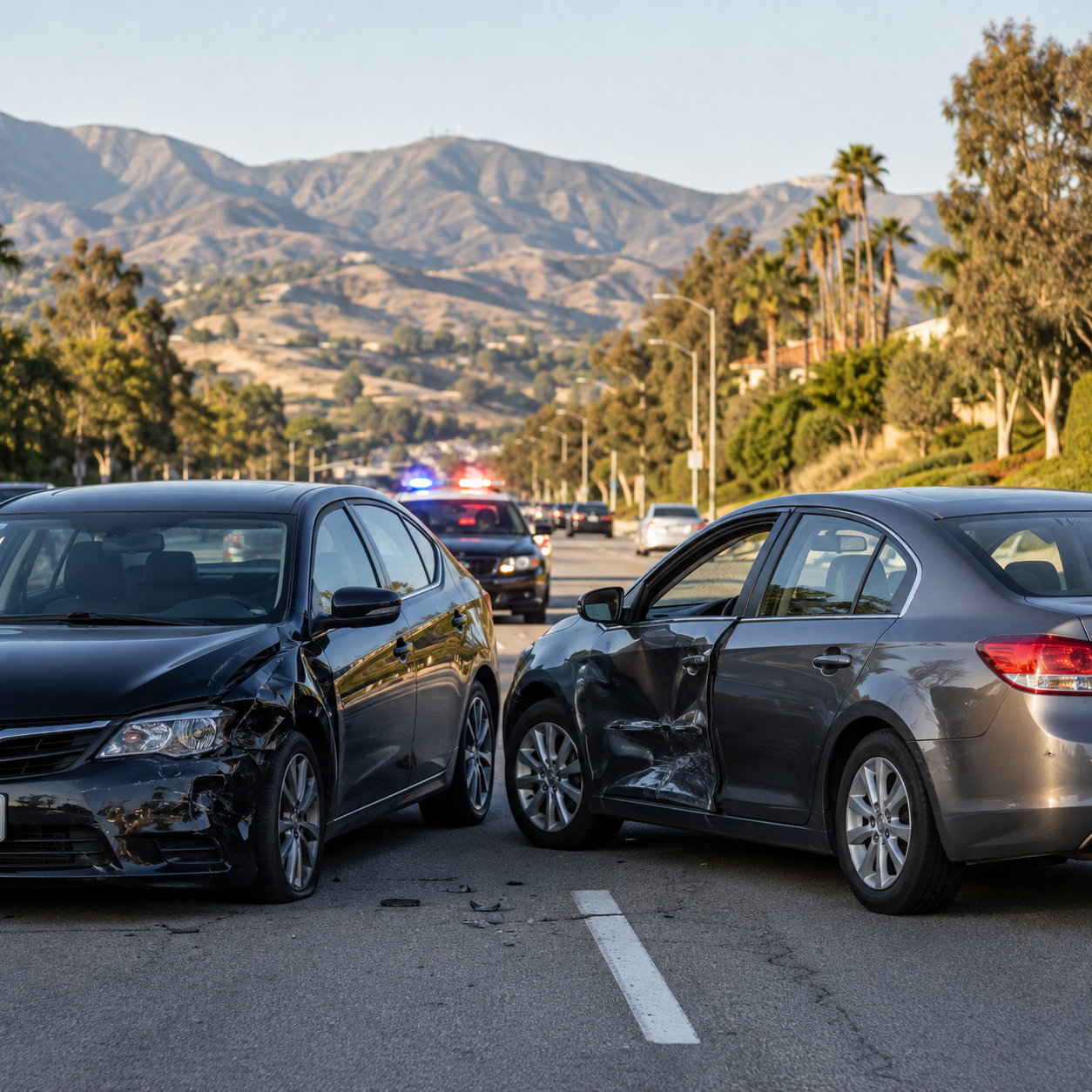
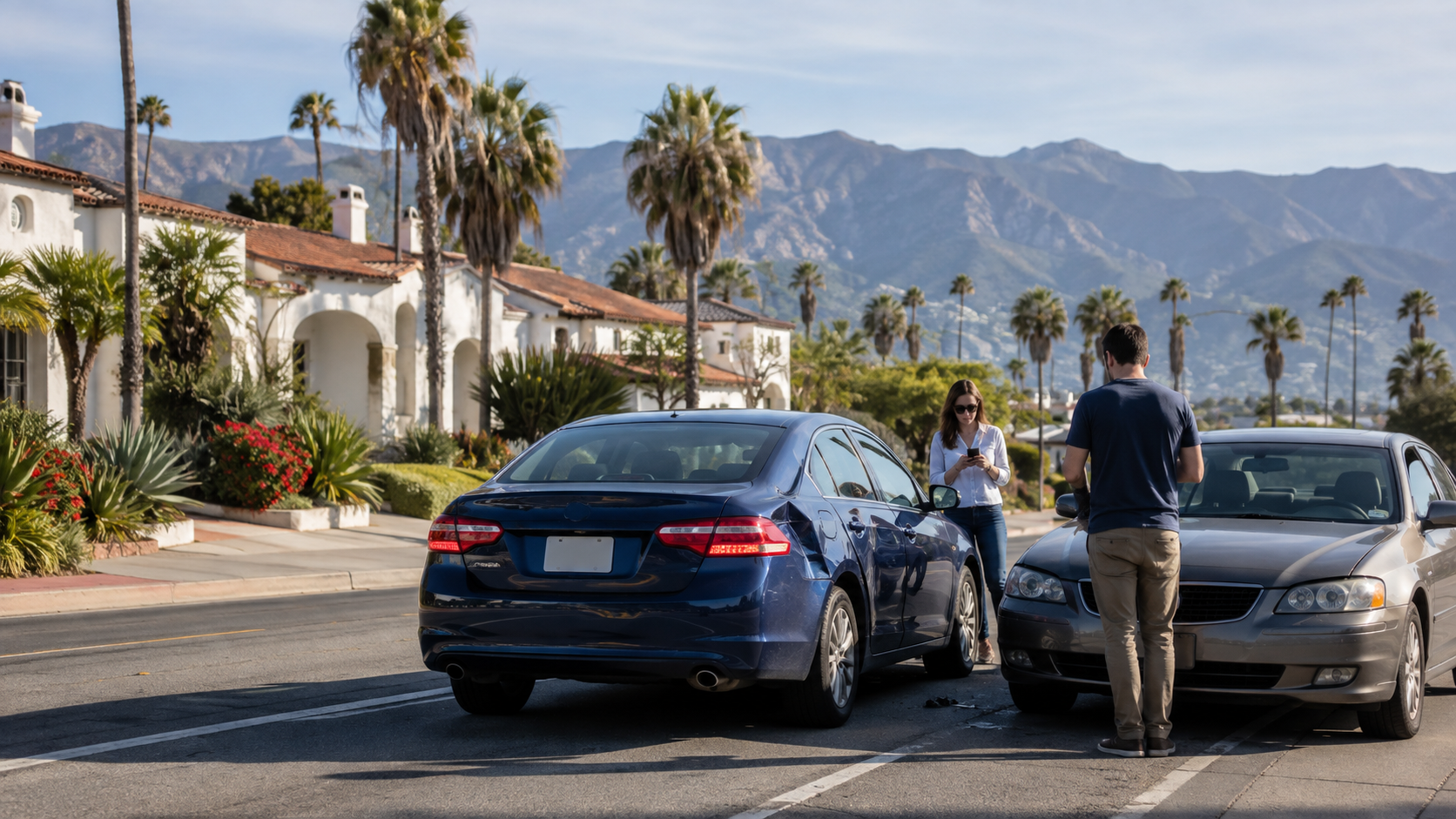
Liability evidence may include police reports, photographs, intersection or business surveillance, dash-camera footage, witness statements, event data recorder information, vehicle damage patterns, traffic-signal timing, cell-phone evidence when properly obtainable, and expert reconstruction in serious cases.
A traffic citation can be relevant, but the civil claim should not rely on the citation alone. Insurance companies independently assess fault and may argue that the claimant was speeding, following too closely, inattentive, or otherwise comparatively negligent.
California Vehicle Duties and Negligence
California drivers owe duties imposed by the Vehicle Code and general negligence law. Depending on the collision, issues can include safe speed, following distance, yielding, lane changes, turns, right-of-way, distraction, and driving under the influence.
A violation of a statute may become important to the negligence analysis, but the facts still matter. The claim should connect the conduct to the collision and the collision to the claimed injuries. See California Civil Code § 1714 for the general negligence framework.
What to Do After an San Bernardino County Crash
Obtain appropriate medical attention, photograph the vehicles and scene when safe, identify witnesses, preserve dash-camera footage, obtain insurance information, and retain repair or total-loss documentation. If a nearby business, residence, or intersection camera may have captured the event, preservation should be considered promptly because footage may be overwritten.
Do not assume that an insurer’s early acceptance of fault resolves the bodily injury claim. Liability, medical causation, damages, and available insurance remain separate issues.
Deadline to File a California Car Accident Lawsuit
CCP § 335.1 generally provides two years for an injury action caused by another’s wrongful act or neglect. Claims involving a city, county, state agency, public bus, dangerous public roadway condition, or public employee may trigger a substantially earlier government-claim deadline under Government Code § 911.2.
San Bernardino Superior Court resources include Civil General Information, Where Can I File?, and Civil eFiling Requirements.
How Safeguard Firm Can Help
Safeguard Firm’s role in an San Bernardino County san bernardino county car accident matter is to organize the claim around proof. That can include identifying all responsible parties, preserving evidence, obtaining reports and records, communicating with insurers, documenting medical and economic losses, and evaluating whether experts are needed.
The investigation should begin with the issues most likely to become disputed. If liability is contested, scene evidence and witness testimony may take priority. If the injury is serious, policy limits, future medical needs, earning capacity, and additional defendants may need early attention. If a commercial or property defendant controls records, preservation and targeted requests can be critical.
When a fair pre-litigation resolution cannot be reached, filing suit may permit formal discovery, subpoenas, depositions, expert analysis, and court enforcement of evidence obligations. Litigation strategy should remain proportionate to the case rather than treating every claim as if it requires the same expense or procedure.
Compensation and Damages
Potential damages depend on the facts and may include past medical expenses, reasonably necessary future medical care, past lost earnings, diminished future earning capacity, property damage where applicable, physical pain, mental suffering, physical impairment, and loss of enjoyment of life. Separate damages may be available in wrongful-death or loss-of-consortium claims when the legal requirements are met.
A responsible valuation should distinguish documented past losses from future projections. It should also account for liability risk, comparative fault, insurance limits, medical causation, credibility, treatment history, prognosis, and the quality of supporting evidence. No website can accurately value a specific case without those facts.
Practical Steps After the Incident
- Seek appropriate medical evaluation and follow reasonable treatment recommendations.
- Preserve photographs, videos, damaged property, receipts, reports, witness information, and relevant electronic records.
- Avoid guessing about fault or the extent of injury in recorded or written statements.
- Keep a clear record of medical appointments, work missed, out-of-pocket expenses, and communications with insurers.
- Identify evidence controlled by third parties that may be overwritten or destroyed and consider prompt preservation.
- Do not allow insurance negotiations to create a false sense that a filing deadline has been extended.
Frequently Asked Questions
Conflicting stories are common. Physical evidence, photographs, video, witnesses, vehicle damage, reports, and expert analysis can help resolve fault.
Your own uninsured motorist coverage may apply if available. Other responsible parties or policies should also be investigated.
California comparative fault can permit recovery even when a claimant shares responsibility, subject to reduction based on the percentage of fault.
Necessary repairs can proceed, but significant physical evidence should be documented first. In a serious disputed case, preservation may be important.
A preexisting condition does not automatically defeat a claim. The issue is what the collision caused or aggravated, supported by appropriate medical evidence.
Timing varies based on medical progress, liability disputes, coverage, the need for experts, and whether litigation is required.
Related San Bernardino County Legal Services
County-level personal injury information for injured people and families seeking representation in San Bernardino County.
Related information for injury claims involving commercial trucks and other large vehicles in San Bernardino County.
Related representation for injured motorcyclists and motorcycle collision claims in San Bernardino County.
Related representation for injured bicyclists and bicycle collision claims in San Bernardino County.
Additional related resources: San Bernardino County Car Accident Attorney · San Bernardino County Pedestrian Accident Attorney · California Personal Injury Attorney · About Safeguard Firm · Contact Safeguard Firm.
Contact an San Bernardino County Car Accident Attorney
Safeguard Firm serves injured clients throughout San Bernardino County while maintaining its published office at 6404 Wilshire Blvd., Suite 860, Los Angeles, CA 90048. Call 310-882-6575, email JR@Safeguardfirm.com, or contact the firm online for a free consultation. Do not add or imply an San Bernardino County office unless a verified location is established.