
San Bernardino County Slip and Fall Attorney
Slip-and-fall and trip-and-fall incidents in San Bernardino County can arise at supermarkets, warehouses, retail centers, hotels, restaurants, apartment communities, medical facilities, mountain resorts, parking areas, and other commercial or residential properties.
Safeguard Firm investigates whether a dangerous condition existed, who created or controlled it, whether the responsible party knew or should have known about it, what inspection or maintenance systems were in place, and whether the condition caused the claimed injury.
Free Consultation
If you were injured in San Bernardino County in a matter involving a slip and fall, contact Safeguard Firm at 310-882-6575 or JR@Safeguardfirm.com to discuss the circumstances and potential legal options.
Common Dangerous Property Conditions
Cases may involve spilled liquids, wet floors, leaking refrigeration, uneven pavement, broken tiles, torn carpeting, defective stairs, missing or loose handrails, poor lighting, debris, merchandise in walkways, potholes, unsafe parking areas, or transitions in floor height.
The relevant question is not simply whether the condition looked dangerous after the accident. The investigation should determine how long it existed, how it was created, whether employees or owners knew about it, what inspection practices existed, and whether warnings or repairs were reasonable.
Notice Is Often the Central Issue
In many premises cases, a defendant argues that the condition appeared moments before the fall and there was no reasonable opportunity to discover it. Evidence of actual or constructive notice may therefore determine the case.
Inspection logs, sweep records, surveillance video, employee testimony, prior complaints, maintenance records, photographs, work orders, incident reports, and evidence that an employee created the hazard can all become important.
Comparative Fault in Slip-and-Fall Cases
California comparative fault allows defendants to argue that the claimant should have seen or avoided the condition. Visibility, lighting, distractions created by the premises, crowding, layout, warnings, and the nature of the hazard all matter.
An open-and-obvious argument is not a substitute for analyzing the entire duty and comparative-fault framework.
Premises Liability Across Retail, Warehouse, Mountain and Desert Properties
The county’s premises landscape ranges from high-volume retail and warehouse properties in the Inland Empire to mountain lodging, desert businesses, apartment communities, medical facilities, and parking areas.
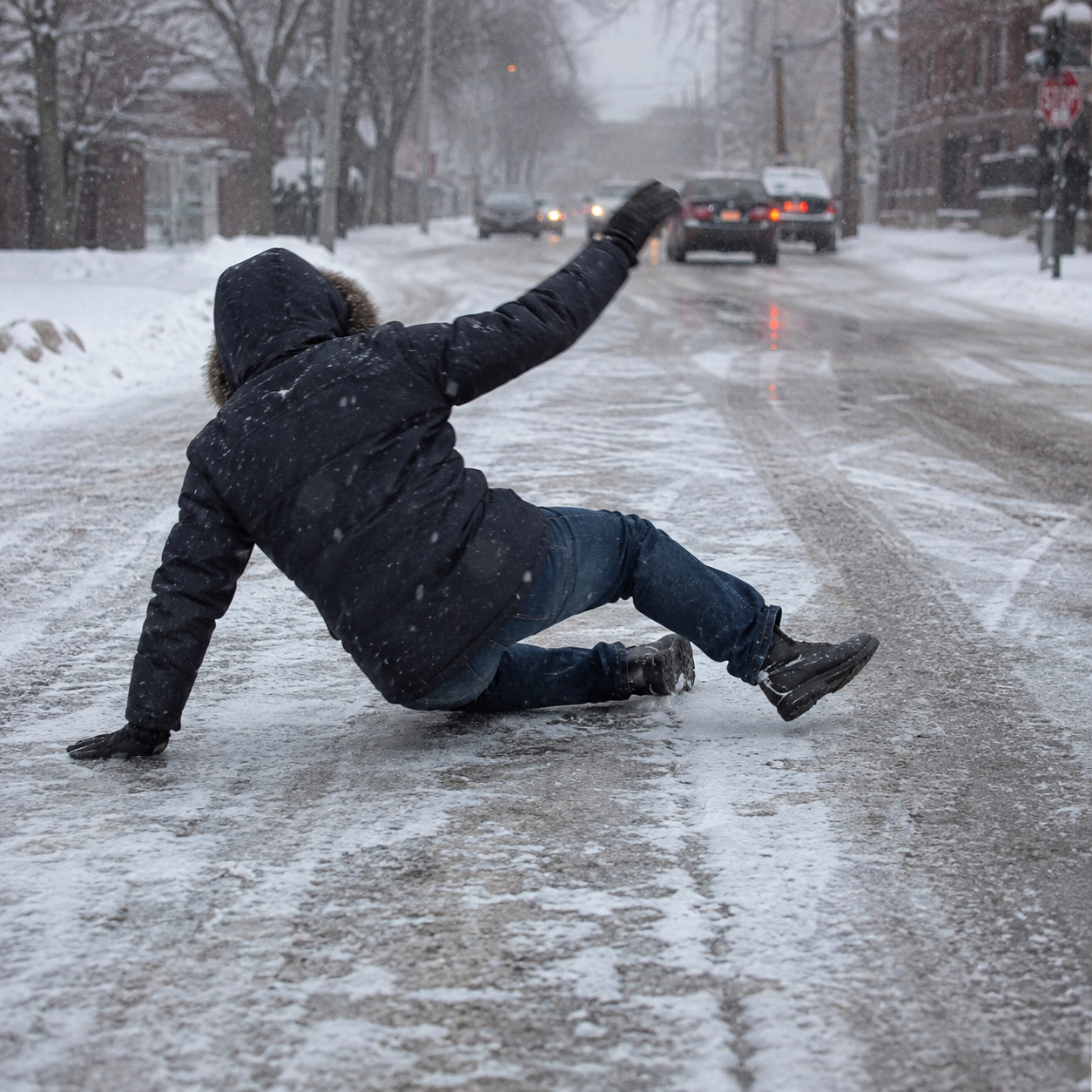
Different environments produce different evidence. A retail spill may turn on sweep logs and surveillance; a warehouse walkway incident may involve workplace traffic and maintenance records; a mountain property case may involve snow, ice, drainage, stairs, or lighting.

Preserving Surveillance and Incident Evidence
Stores, hotels, shopping centers, and apartment properties frequently use surveillance systems. Footage can show the hazard, how long it existed, whether employees passed by it, the fall itself, and what happened afterward.
A preservation request should be considered promptly because many systems automatically overwrite video. Claimants should also preserve footwear, photographs, receipts, witness names, and any contemporaneous communications.
Proving Causation and Injury
Defendants may dispute whether the alleged condition actually caused the fall or argue that the claimant was distracted, failed to watch where they were walking, or had a preexisting condition.
Medical records, scene evidence, footwear, photographs, witness accounts, and a clear history of the fall mechanism can help connect the dangerous condition to the injury.
Compensation and Damages
Potential damages depend on the facts and may include past medical expenses, reasonably necessary future medical care, past lost earnings, diminished future earning capacity, property damage where applicable, physical pain, mental suffering, physical impairment, and loss of enjoyment of life. Separate damages may be available in wrongful-death or loss-of-consortium claims when the legal requirements are met.
A responsible valuation should distinguish documented past losses from future projections and account for liability risk, comparative fault, insurance limits, medical causation, credibility, treatment history, prognosis, and the quality of supporting evidence.
San Bernardino County Premises Environments
San Bernardino County’s retail centers, hotels, restaurants, entertainment destinations, apartment communities, beach areas, and office developments create varied premises-liability scenarios. Local examples should remain generic unless a particular business is actually involved in a client’s claim.
The page should not imply affiliation with any shopping center, hotel, amusement destination, grocery chain, or municipality.
How Safeguard Firm Can Help
Safeguard Firm’s role in a San Bernardino County slip-and-fall matter is to organize the claim around proof. That can include identifying all responsible parties, preserving evidence, obtaining reports and records, communicating with insurers, documenting medical and economic losses, and evaluating whether experts are needed.
The investigation should begin with the issues most likely to become disputed. If liability is contested, scene evidence and witness testimony may take priority. If the injury is serious, policy limits, future medical needs, earning capacity, and additional defendants may need early attention. If a commercial or property defendant controls records, preservation and targeted requests can be critical.
When a fair pre-litigation resolution cannot be reached, filing suit may permit formal discovery, subpoenas, depositions, expert analysis, and court enforcement of evidence obligations. Litigation strategy should remain proportionate to the case.
California Liability and Filing Resources
Relevant California legal resources include Civil Code § 1714, Code of Civil Procedure § 335.1, and Government Code § 911.2. Claims involving public property can trigger special substantive rules and government-claim procedures.
For San Bernardino County civil-court information, see the Superior Court civil division, filing-location guidance, and civil eFiling requirements. For state transportation context, see Caltrans District 8 and its District 8 overview.
Practical Steps After the Incident
- Seek appropriate medical evaluation and follow reasonable treatment recommendations.
- Preserve photographs, videos, damaged property, receipts, reports, witness information, and relevant electronic records.
- Avoid guessing about fault or the extent of injury in recorded or written statements.
- Keep a clear record of medical appointments, work missed, out-of-pocket expenses, and communications with insurers.
- Identify evidence controlled by third parties that may be overwritten or destroyed and consider prompt preservation.
- Do not allow insurance negotiations to create a false sense that a filing deadline has been extended.
Frequently Asked Questions
No. A claimant generally must prove a dangerous condition, a basis for the defendant’s responsibility or notice, causation, and damages.
The absence of a warning can be relevant, but liability still depends on whether the defendant owed and breached a duty concerning the condition.
Surveillance, inspection logs, employee testimony, footprints or track marks, witness accounts, and other circumstantial evidence may help.
Accurately reporting the event can preserve important information. Keep a copy or photograph if available and avoid speculation about fault.
That can become part of a comparative-fault argument, but it does not automatically eliminate the claim.
Claims involving public property can trigger special substantive rules and the government-claim procedure, including a six-month claim deadline in many injury cases. See Government Code § 911.2.
Related San Bernardino County Legal Services
County-level personal injury information for accident, negligence, damages, insurance, and filing issues.
Related representation for motor-vehicle collision claims throughout San Bernardino County.
Related information for injured riders and motorcycle collision claims in San Bernardino County.
Related representation for injured bicyclists and bicycle collision claims in San Bernardino County.
Additional related resources: San Bernardino County Truck Accident Attorney · San Bernardino County Pedestrian Accident Attorney · California Personal Injury Attorney · About Safeguard Firm · Contact Safeguard Firm.
Contact an San Bernardino County Slip and Fall Attorney
Safeguard Firm serves injured clients throughout San Bernardino County while maintaining its published office at 6404 Wilshire Blvd., Suite 860, Los Angeles, CA 90048. Call 310-882-6575, email JR@Safeguardfirm.com, or contact the firm online for a free consultation.